Is there another food that satisfies all five senses while also mastering the use of the four elements of cooking — fat, salt, acid and heat?
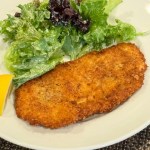
The cutlet has it all! And while many of us Italians claim it as our own having started in Milan, many cultures around the world share a love for a thin slice of meat, breaded and fried to a light crisp.
The French, which at times lay their own claim, call it a “cotoletta,” which may well support their arguments. They say the Napoleonic wars helped spread its adoption throughout Europe. Their version, often based on veal, can be both breaded and fried or dipped in flour and then egg, fried and then served in a sauce such as Francaise. A little fancier, but same foundational approach.
The Japanese word for cutlets is Katsu and they favor pork (tonkatsu) and chicken (katsu.) These are usually breaded with panko (of course!), deep fried and sliced before serving.
In Brazil, it’s called milanesa, perhaps proof of rightful origin. Typically using chicken or beef, it’s pan fried and served with rice, beans and salad. They even have a variation using fish.
In Germany or Austria, as we all know, they call it schnitzel, often based on veal or pork. It’s often served with some kind of tasty carb, potato salad or spatzle noodles and some kind of cabbage slaw.
In Greece, they will use lamb as the base, a protein that is more popular there.
In Iran and India, they often use ground meat mixed with potato or other meats that are then fried without breading. Think pan-fried burger of sorts.
The Taiwanese have their own tasty take on the cutlet, marinating it overnight in a blend of flavors such as soy and oyster sauces, garlic and five-spice powder. Then they create a slurry with egg and corn starch, dipping chicken or pork into sweet potato flour before pan frying. Corn starch, specifically, creates a lighter, crispier crust.
Hell even the American South, which can seem like another country to this Northerner, has chicken fried steak, which perhaps on point involves a beef cutlet slathered with a white gravy that sometimes has sausage crumbles in it. (Still no chicken.)
Regardless of the how, the cutlet is the perfect “what” in many cultures for a simple reason: It is a complete and perfect food requiring minimal ingredients and time. Egg, bread crumbs, oil, protein. That’s it!
Done right, it’s moist inside, crispy enough to hear outside, hits the taste buds with the fat from the oil, the salt and lemon and makes the entire kitchen smell like a commercial kitchen. (Seriously, burn a candle afterwards and open the windows.)

My own approach to the cutlet has evolved a bit over time. We generally gravitate to pork or chicken breast. A little salt, pepper and water are added to the egg before beating. We dredge in flour first, then into the egg before a combination of Italian-style bread crumbs and panko. We pan fry in vegetable oil because it has a higher heat point than olive oil and doesn’t compete with the flavor.
A healthy squeeze of lemon before eating with a side salad, and you’ve got yourself a perfect meal. And here’s the kicker: They freeze amazingly well. Just reheat in the air fryer or toaster oven and you’ve got another tasty meal.
Now I know a lot of folks will say they love chicken cutlet parmigiana but be forewarned: Real Italians don’t eat this dish. There is only one parmigiana in Italy and it’s made with melanzane, or eggplants. And really, red sauce just makes the cutlet “mushade” as my relatives would say, pronounced mu-shad and meaning mushy.
Eat Cutlets. Be Happy. Maybe we start selling t-shirts?